
No Franklin County Warrant Database
No official Franklin County active criminal warrant search or wanted-person list was located on the sheriff or county website in the research file. The Franklin County Sheriff's Department publishes jail, bonds, SAVIN, and tax-warrant resources, but the located warrant page is for Indiana tax warrants. It is not an active criminal arrest-warrant lookup.
That missing database changes the correct workflow. Start with MyCase for public criminal or traffic cases, then read the latest docket entries for warrant issued, warrant served, warrant recalled, failure to appear, bond, or probation-related events. Use the sheriff phone line or in-person contact when arrest risk or surrender logistics matter. For court date and copy questions, use the Clerk of the Circuit Court or the court.
A public case search can help identify a possible warrant event, but it is not a live clearance tool. A warrant can be served, recalled, or changed after the last online view. Franklin County users should treat MyCase as a court-history source and the sheriff or issuing court as the place to confirm active handling, bond, surrender instructions, or whether a missed hearing has been reset.
Important: Do not rely on a stale web result when arrest or surrender is possible; call the sheriff or court.
Franklin County Tax Warrants
Franklin County's official sheriff warrant page concerns Indiana tax warrants. If a person received a notice, payment must be mailed to the Franklin County Sheriff Department by money order or cashier's check. The warrant number must be included with the payment. The research did not locate authority for personal checks on that page. Indiana Department of Revenue customer service is listed for tax-warrant questions at 317-232-2240.
Tax warrants should not be mixed with arrest warrants. A tax warrant is a collection matter tied to state tax debt, while an arrest or bench warrant is tied to court authority and law-enforcement action. The sheriff's tax-warrant page is still important because it is the one official Franklin County warrant-specific page located in the research, but its payment instructions should not be used for criminal warrant clearance.
The tax-warrant screenshot used here comes from the Franklin County sheriff tax-warrants page.
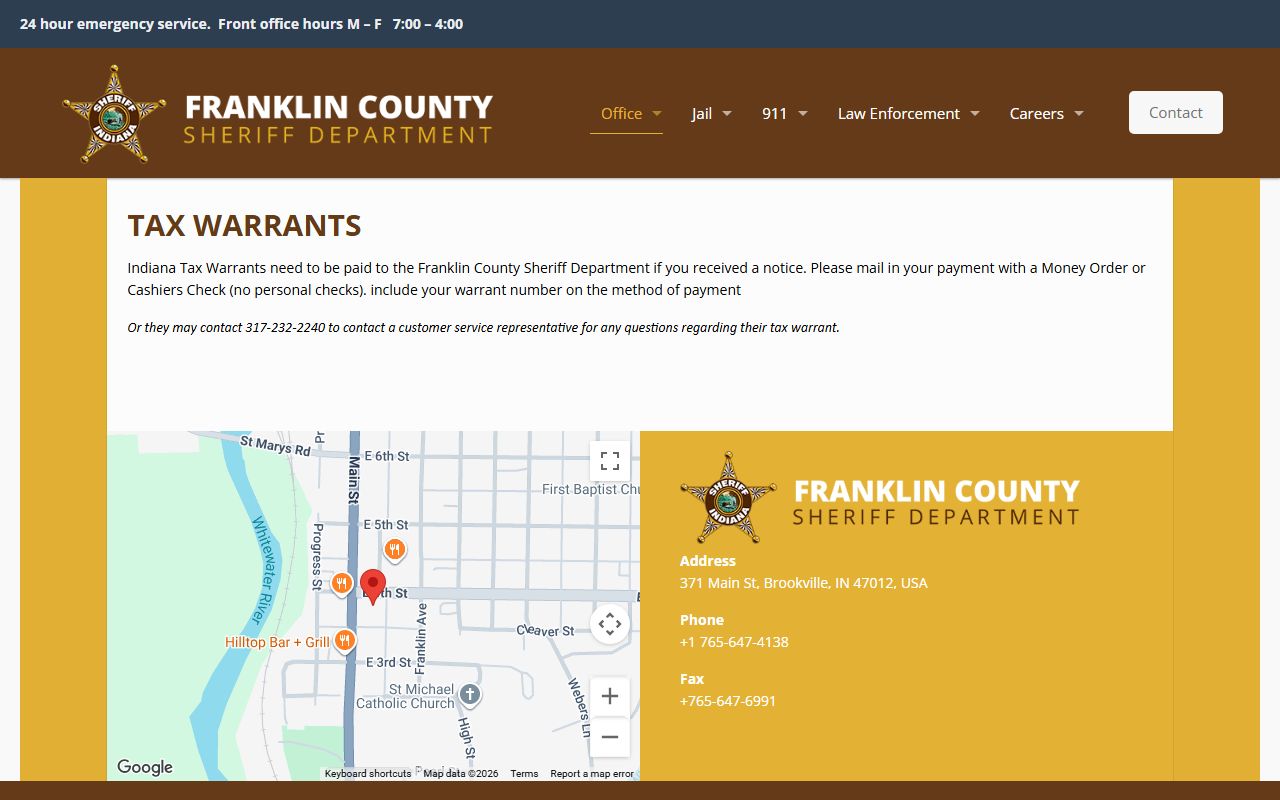
This image belongs with civil tax-collection warrants, not criminal arrest-warrant clearance.
Franklin County Warrant Types
Different warrant types point to different offices and records. A bench warrant tied to a missed court date is not handled the same way as a tax warrant, search warrant, or fugitive matter. A Franklin County warrant record may also be only a docket event in a criminal, traffic, probation, or ordinance case.
- Arrest warrant means a court order authorizes law enforcement to arrest a person after probable cause or charging action.
- Bench warrant is issued by a judge, often for failure to appear, contempt, nonpayment, or missed court obligations.
- Search warrant authorizes a search of property and is usually not useful as a public pre-execution lookup.
- Probation-violation warrant is tied to supervision after conviction and may appear with probation docket events.
- Tax warrant is an Indiana tax-collection tool with separate sheriff payment instructions.
- Fugitive warrant may involve another state or extradition and cannot be resolved by a county web search alone.
Search Franklin County Warrants
Because Franklin County did not publish an active criminal warrant list in the reviewed official sources, use a fallback chain. MyCase can show warrant-related events in a public case, but it is not a live law-enforcement confirmation tool. The sheriff can address law-enforcement handling, and the clerk or court can address missed-court and bench-warrant questions tied to Franklin Circuit Court.
The best first search term is usually the case number. If the case number is not known, use a full name and then narrow by Franklin County, case type, and date. Common names can produce results from other Indiana counties. A traffic or ordinance matter may also involve the issuing city, town, or police agency if it is not clear from the statewide court search.
- Search MyCase for a Franklin County criminal or traffic case by name or case number.
- Read the chronological case summary for warrant issued, served, recalled, bond, failure-to-appear, or probation entries.
- Call the Clerk of the Circuit Court at 765-647-5111 or the court at 765-647-4186 for bench-warrant and court-date questions.
- Call the Franklin County Sheriff at 765-647-4138 for law-enforcement handling or surrender logistics.
- If the person may already be in custody, search the jail portal, SAVIN, or VINE.
- For tax warrants, follow the sheriff tax-warrant page and include the warrant number with money order or cashier-check payment.
SAVIN is a custody and notification service, not a county warrant clearance database. The image below comes from the Indiana SAVIN custody notification service.
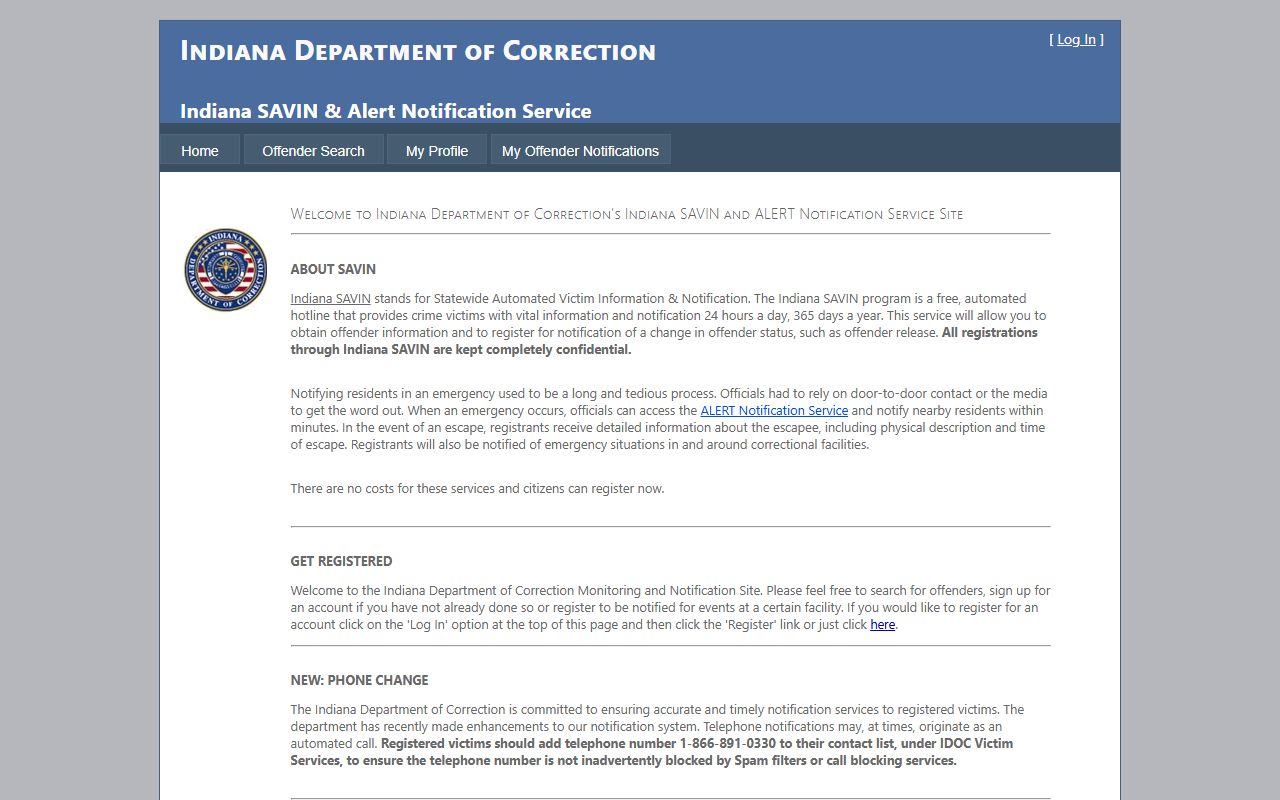
Use SAVIN after custody is possible or confirmed, then verify the court case separately if charge or warrant status matters.
Franklin County Warrant Fields
There is no located county active-warrant search form to render. The practical search-field table comes from the systems that may reveal warrant context: MyCase for court docket events and SAVIN/VINE for custody. Use the least risky, most exact identifier available, especially case number or complete name plus date of birth when the interface allows it.
Search fields should be matched to the question. A court case number is best for a bench warrant tied to a missed hearing. A name and birth date can help with custody status in jail or SAVIN systems. A tax-warrant notice should be handled by its warrant number because the sheriff's payment instructions require that number on the money order or cashier's check.
| System | Field | Required | Notes |
|---|---|---|---|
| MyCase | Name or case number | Conditional | Best for docket entries showing warrant issued, served, recall, bond, or failure to appear. |
| MyCase | Court or county filter | Optional | Narrow to Franklin County when possible. |
| SAVIN | Search by offender name, offender ID, or case number | Yes | Used for custody status and notifications. |
| SAVIN | Last name and first name | Conditional | Partial or complete last name may be accepted. |
| Jail portal | County, name, birth date | Optional | Useful only if a person is in county custody. |
| Tax warrant payment | Warrant number | Yes for payment | Include the warrant number with money order or cashier's check. |
What Franklin County Warrants Show
A public warrant-related record may appear as a court docket entry, custody record, bond event, or tax-warrant notice. The field list depends on the source. Court records tend to show case and event data. Jail and SAVIN records tend to show custody status. Tax-warrant records focus on payment and warrant-number instructions.
For Franklin County criminal and traffic matters, the chronological case summary is often the most useful public record because it can place a warrant event in context. A warrant issued before an initial hearing, a warrant after failure to appear, and a warrant recalled after service or bond are different facts. The latest docket entries should be reviewed before calling, since they help the clerk, court, or sheriff identify the right case.
| Field | What It Shows |
|---|---|
| Defendant name | The person tied to the case or warrant event. |
| Case number | The court case connected to the warrant or failure-to-appear event. |
| Charge or cause | The criminal charge, traffic matter, probation issue, or tax matter involved. |
| Warrant type or event | Issued, served, recalled, bench warrant, arrest warrant, tax warrant, or related entry. |
| Issuing court or judge | The court authority when that field is public. |
| Bond or no-bond status | Whether bond appears in the court or custody record. |
| Next court date | The next hearing if the docket displays one. |
| Custody status | Whether jail, SAVIN, or VINE shows the person in custody. |
SAVIN and VINE Limits
Indiana SAVIN and VINE are helpful after an arrest because they can show custody status or let a victim register for status-change alerts. They should not be described as a complete Franklin County warrant search. A person can have a warrant-related court entry without appearing as currently in custody, and a person can be in custody for a matter that still needs court verification.
The statewide VINE portal is one official custody-status channel. The image below comes from the Indiana VINE public portal.
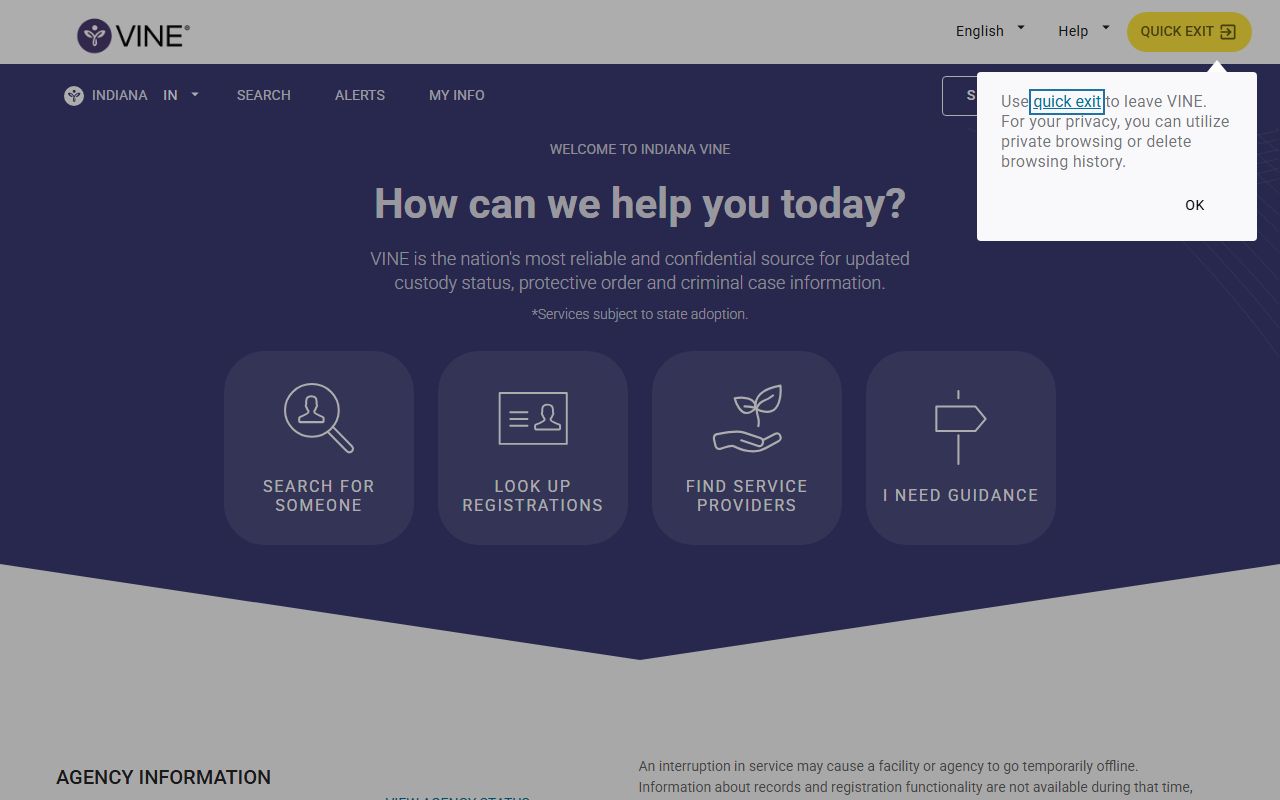
VINE helps with custody and notification, while MyCase and the clerk/court remain needed for warrant-related docket context.
SAVIN also has an offender-search screen. The image below comes from the Indiana SAVIN offender search.
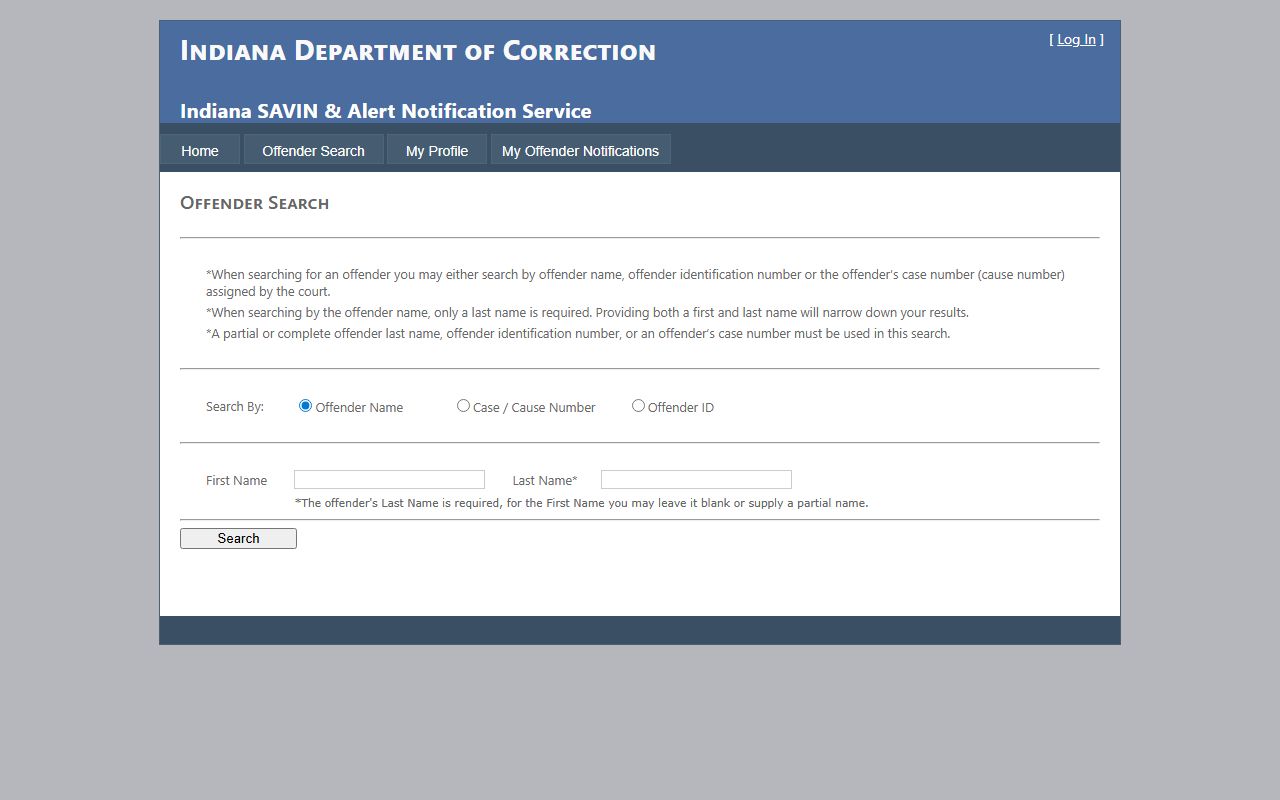
Search fields in that system support custody lookup, not a universal active-warrant certification.
Resolve Franklin County Warrants
If a Franklin County warrant appears possible, do not assume payment or online lookup clears it. For bench warrants tied to missed court, contact the Clerk of the Circuit Court or court. For law-enforcement handling, call the sheriff. For criminal warrants, ask about bond, holds, initial-hearing timing, and whether counsel should coordinate surrender. For tax warrants, use the sheriff tax-warrant payment instructions.
The sheriff's local bond information also matters after an arrest. The research notes cash/surety handling for Level 3 and Level 4 felonies, cash-only bonds for other bondable offenses, an 8-hour drug-related hold, and an OWI release rule requiring a .00 blood or breath alcohol level. Those are custody and release facts, not proof that a warrant is active, so they should be confirmed with the sheriff when a person is actually in custody or planning surrender.
Some warrant-related custody or registry issues can be affected by Indiana statutes outside the local court docket. The image below comes from Indiana Code Title 11 registry statutes.
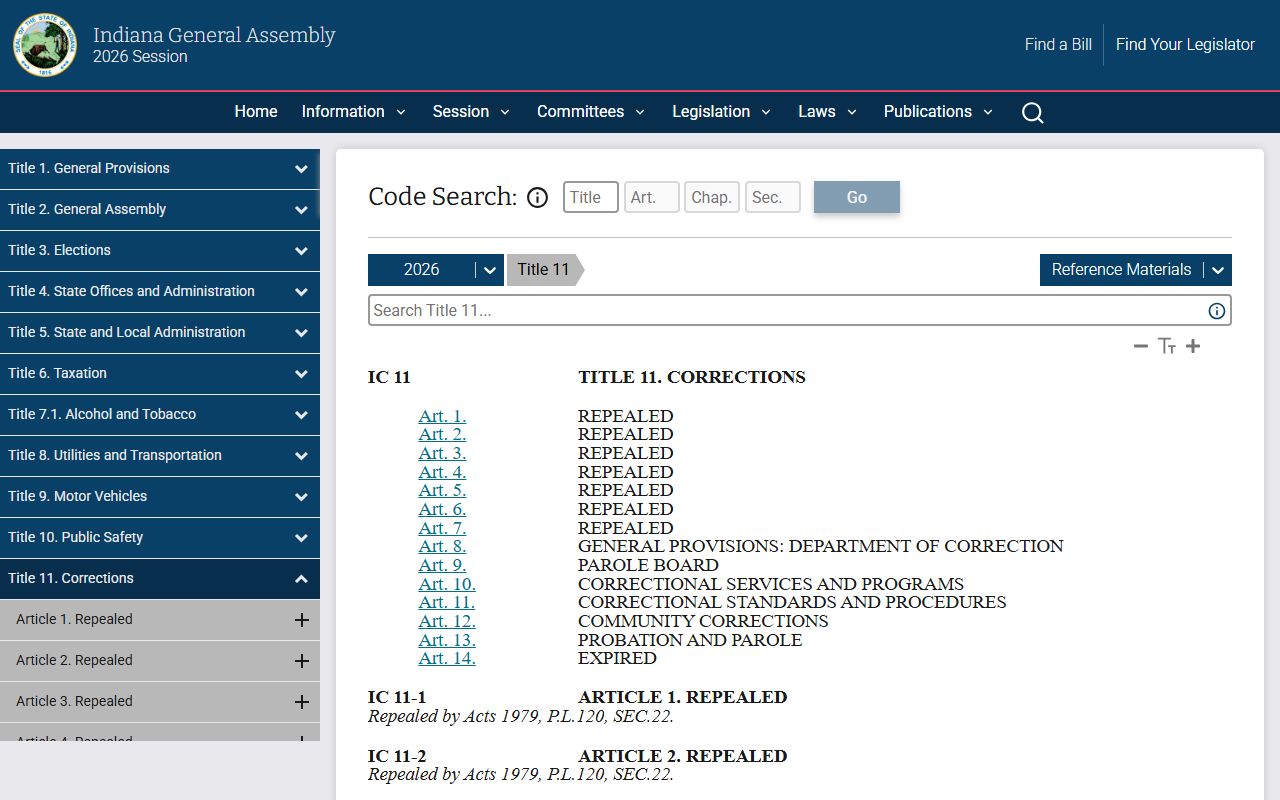
Statutory sources can explain public registry rules, but local warrant status still needs the issuing court or sheriff channel.
Note: A warrant can change from active to recalled or served before a public database catches up.