
Franklin County Probate Records
Franklin County does not have a separate surrogate, orphans' court, or standalone probate court. Probate matters are handled through the Circuit Court and the Clerk of the Circuit Court. The county clerk page lists probate as a Room 104 Clerk's Office function, along with small claims, protection orders, child support, traffic payments, fines, and marriage licenses. For public estate files, wills admitted to an estate, guardianship cases, and probate-copy questions, the Franklin County Clerk is the main practical office.
Indiana court public-record guidance says wills are not usually available online, but they may be available in the clerk's office if filed. Certified copies of wills, estate orders, letters, and other probate documents should be requested from the clerk in the county where the probate case is heard. For Franklin County, that means the first-floor clerk counter at the courthouse in Brookville. MyCase can still help identify a public estate or guardianship case before a copy request is made.
Probate users should separate three tasks. First, search for the public case or docket entry. Second, identify whether the document needed is a will, order, letters, inventory, accounting, guardianship filing, or closing record. Third, ask the clerk whether a plain or certified copy is available. That order avoids treating an online index as a certified probate document.
The Indiana courts public-record request guidance explains why some probate documents, including wills, may require direct clerk contact rather than online download.
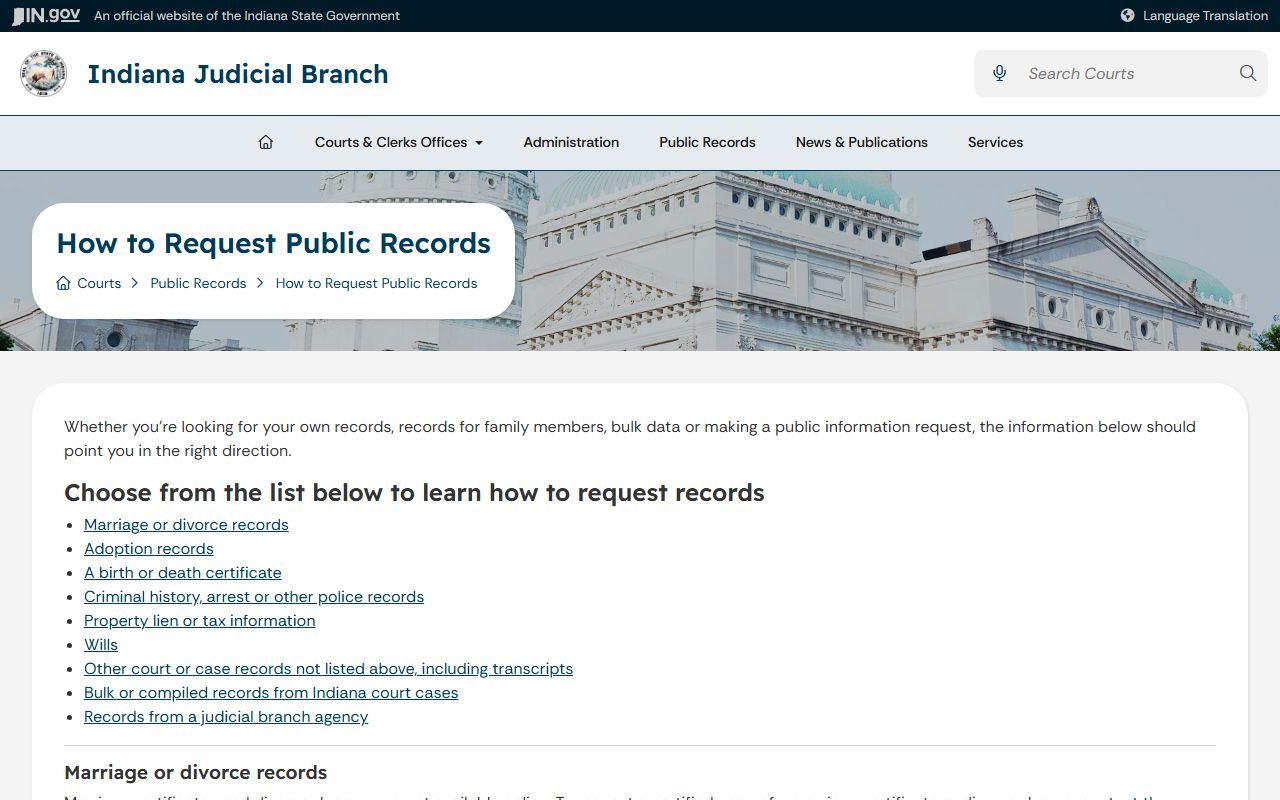
That statewide guidance matches Franklin County's local structure: search public case entries online, then use the clerk for filed documents and certification.
Franklin County Probate Terms
Probate language can be dense. These terms appear often in Indiana estate and guardianship records and help explain what a Franklin County probate case is trying to do.
- Testator
- A person who made a will.
- Executor
- A person named in a will to carry out its terms. Indiana records may also use personal representative.
- Intestate
- Dying without a valid will, so property is handled under Indiana succession rules.
- Guardianship
- A court case asking for authority to care for a minor or adult who needs help with personal or financial affairs.
- Conservatorship
- A protective arrangement for property or finances. Indiana probate files may use guardianship terms for similar protective matters.
- Letters
- Court-issued proof that a personal representative or guardian has authority to act.
Search Franklin County Probate Records
Start with Indiana MyCase when looking for a public Franklin County estate, guardianship, trust-related dispute, or other probate case entry. Search by the decedent's name, estate name, guardian, protected person, petitioner, or case number. Narrow to Franklin County or Franklin Circuit Court when the interface allows it. If the result has no linked document, the record may still be public, but the copy route is the clerk.
Name searches in probate can be less direct than ordinary civil searches because the relevant name may be the decedent, the estate, the personal representative, a guardian, or a protected person. If a search by one name fails, try another known party or use a filing-date range. Older estate material may also have limited online detail, so the clerk remains the fallback when MyCase does not show the needed file.
- Search MyCase by name or case number, using Franklin County as a filter when possible.
- Review the case caption, case type, filing date, status, and chronological case summary.
- Look for probate events such as petition filed, will admitted, letters issued, inventory, notice to creditors, accounting, order, or closing.
- If the will or document is not linked, call the Franklin County Clerk at 765-647-5111 for copy instructions.
- Ask whether a certified copy is needed before mailing payment or visiting the counter.
| MyCase field | Use in a probate search |
|---|---|
| Search mode | Name or case number is most useful for estate and guardianship matters. |
| Name | Search decedent, estate, guardian, protected person, petitioner, or party name. |
| Case number | Best for a known estate or guardianship case. |
| County/court | Select Franklin County or Franklin Circuit Court to reduce statewide results. |
| Case type | Use estate, guardianship, trust, or probate-related filters where available. |
| Date range | Narrows older estates or same-name searches. |
Franklin County Probate Contact
The local probate contact is the Clerk of the Circuit Court because probate is a circuit-court function in Franklin County. The circuit judge's office is on the courthouse second floor, while the clerk's probate counter is on the first floor. Use the clerk for public file access, filed wills, estate-document copies, and fee questions. Use the court for hearing and judge-related instructions only when directed by court staff.
The clerk page identifies probate as one of the Room 104 functions. That matters for visitors because the courthouse has multiple court-adjacent offices. Probation is in the annex, the prosecutor is in the courthouse, and the judge's office is upstairs, but probate filings and copies begin with the clerk counter. Calling first is especially useful when a will, letters, or certified estate copy is needed.
Probate Division of the Franklin County Circuit Court
Franklin County Courthouse
459 Main Street
Brookville, IN 47012
Clerk: 765-647-5111
Court/Judge: 765-647-4186
Clerk hours: Monday-Friday, 8:30 a.m.-4:00 p.m.; closed noon-1:00 p.m.
Franklin County Probate Fees
Official Franklin County probate filing and copy fees were not located in the reviewed county sources. The clerk's page does publish accepted payment methods and the credit-card surcharge, so those details can be stated with confidence. For any estate opening, guardianship filing, letters, plain copy, or certified copy fee, ask the clerk before preparing payment.
| Item | Amount or payment note |
|---|---|
| Probate filing fee | Not located in official Franklin County sources reviewed; ask the clerk. |
| Guardianship filing fee | Not located in official Franklin County sources reviewed; ask the clerk. |
| Plain probate copy | Not located in official Franklin County sources reviewed; ask the clerk. |
| Certified probate copy or letters | Not located in official Franklin County sources reviewed; ask the clerk. |
| Accepted clerk payment methods | Cash, money order, cashier check, or credit card only. |
| Credit-card fee | 3.5 percent or minimum $0.50. |
Note: Do not use statewide or neighboring-county probate fee schedules as a substitute for Franklin County clerk confirmation.
Franklin County Estate Records
A public probate file can include a petition or application, a will admitted to the case, appointment of a personal representative, letters, inventory, creditor notices, accountings, distribution papers, orders, and closing entries. Guardianship records can include petitions, reports, orders, financial accountings, and court findings. Trust-related litigation may appear when a dispute or accounting is filed as a court case.
Some probate-related work may not create the same kind of public court file. Indiana's small-estate affidavit is a state form used by qualifying successors to collect property without opening a full estate in many circumstances. A small-estate affidavit and a court probate case are different. The affidavit may avoid a formal estate, while a probate court case creates a file with court entries and clerk-copy procedures.
Probate files can also overlap with family or protective issues. A guardianship for a minor or an adult may include sensitive medical, financial, or personal details. A trust dispute may look like civil litigation even though it concerns estate planning. Those differences affect both search terms and public access. Use the case type, docket events, and clerk guidance to confirm what kind of probate-related record exists.
The Indiana Code Title 31 reference captured for Franklin County probate records is relevant to family, juvenile, and guardianship confidentiality issues that can affect public access.
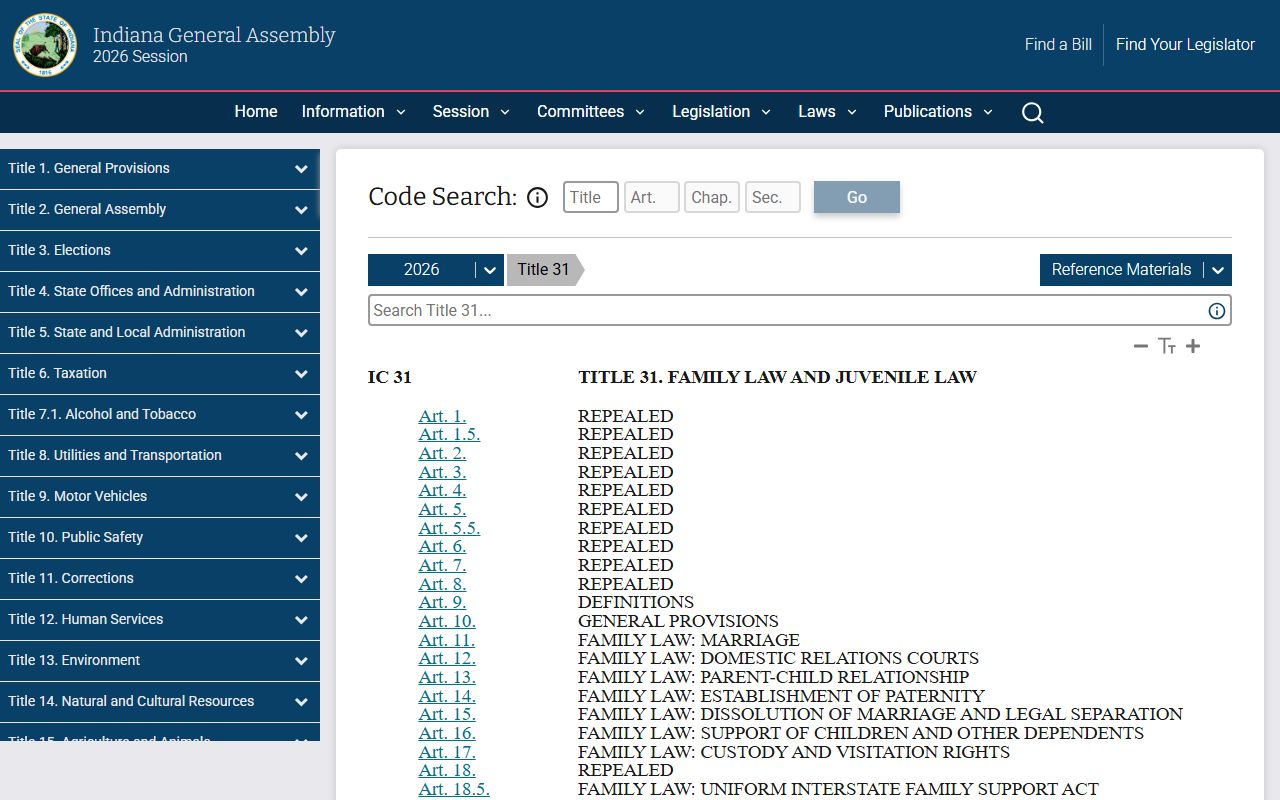
Those confidentiality rules matter most when a probate-adjacent file involves minors, guardianship, adoption, or sensitive family information.
Restricted Franklin County Probate Records
Not every probate or probate-adjacent record is open in full. Guardianship files may contain medical, financial, or minor-child information. Adoption records are confidential under Indiana court guidance and are not available online. Juvenile and family-related material can be restricted under Indiana law and court rules. Sealed filings and confidential personal identifiers are excluded from public access even when the case index remains visible.
When MyCase shows a Franklin County probate case but omits a document, do not assume the document is missing. It may be public but not linked online, or it may be restricted. The clerk can explain the copy process for public documents and whether a court order or party access is needed for restricted material. Certified copies should always come from the Franklin County Clerk rather than from a screen print.
If a probate record is needed for a bank, title company, benefits office, court filing, or out-of-state proceeding, ask for the exact form of certification before ordering. A plain copy, certified copy, and letters proving authority can serve different purposes. Franklin-specific copy and certification fees were not located in the official sources reviewed, so the clerk should confirm the cost before a request is mailed or paid by card.